Author: docmac

  • Long Term Weight Loss Tips

    5 Tips for Long Term Weight Loss Success
    weightlossscale

    Losing weight can take a lot out of you, physically, emotionally, mentally. And many times, once it’s off, you feel like those calories will never return. But the sad truth is that we easily pack on the pounds soon after because we fall back into the same negative habits as before.

    If you’ve lost some weight, follow these 5 smart tips to guarantee that you keep it off for good:

    1. Don’t diet

    Dieters gain back their weight within 6 months to a year. Some even gain more than they lost after they stopped dieting. So instead of following some 10-week eating plan, why not change your entire outlook on food?

    Food shouldn’t be a substitute for anything. That’s the first rule. Food should be eaten for nourishment and sustainability. It should taste good and look good as well to appeal to all your senses without being loaded with processed sugars and oils.

    Make it a habit to eat foods rich in fiber, protein, omega-3 fatty acids, minerals and vitamins, like fruits, vegetables, whole grains, meat, and fish. These give you the sense that you’re full for longer, and they contain few calories. Use aromatic vegetables like onions and garlic, as well as spices and herbs to make your food look, smell and taste delicious. You can also use condiments to add flavor to your dishes.

    Another great trick to boost your metabolism and keep those calories burning all day is to eat small amounts several times throughout the day. Use small plates and enjoy a nourishing dish every 3 – 4 hours. This helps maintain blood sugar levels, so you don’t feel that slump in the afternoon while keeping your energy levels up and calories at a minimum.

    Also try to really focus on what you’re eating. Most of the time, we’re too busy or tired to notice how our food even tastes. This is one of the worst habits you can have because it forces you to eat more than you should and leaves you feeling bloated and heavy. Instead, take a few seconds to appreciate your food; its texture and smell.

    Taking in the whole experience of eating allows you to enjoy your food more without having the need to overindulge and eat more than you should.

    Also, never underestimate the power of water. Drinking lots of water daily, especially before meals, keeps your body hydrated, increases metabolism and helps you burn off more calories. You can add vegetable or fruit slices for a healthy kick.

    2. Strengthen your muscles
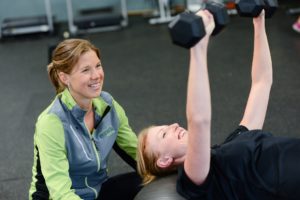
    weightlifting

    As we age, we lose muscle mass which is why it’s crucial to start strengthening your muscles to prevent fatigue, loss of balance and weak bones. Also, muscle tissue burns more calories, even when you’re not working out, than fat. Yet another reason to stretch and pump those muscles.

    3. Accept the setbacks

    There will be days when you’re faced with difficult decisions, like a party at work or going out with friends. If you can plan ahead, then you’re one step ahead of the game. You can fill up on healthy snacks before the event, or even have something in your bag you can munch on like carrot sticks or a granola bar.

    There will also be cravings that gnaw at you until you can’t take it anymore. More often than not, cravings are never really about the food. They can be a signal that your body lacks a certain mineral. For example, when you crave chocolate, what your body is really saying is that it’s lacking in magnesium.

    Cravings could also be a reaction to a stressful day at work, or an emotional problem you’re going through. All cravings last about 20 minutes so find something to distract yourself; watch TV, read a book, even brushing your teeth will quickly kill off your craving.

    4. Surround yourself with supportive friends and family

    People who believe in the same things as you make it easier to enjoy a healthy, well-balanced lifestyle. They support you and believe in what you’re doing, and sometimes even take the time to be your workout buddy or prepare meals with you. And, in turn, they become your accountability partner so that if, and when, you slip up, you have someone that provides understanding and support.

    5. Exercise

    The suggested minimum for maintaining weight loss is 250 minutes per week. This comes down to about 45-50 minutes of moderate activity for 5 days. While these numbers may seem disheartening, it’s actually simpler than you may think.
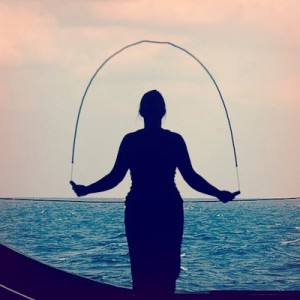
    jumpingropeforexercise
    Jumping Rope For Exercise

    Pick an activity you enjoy, as walking, swimming, gardening, and start at your own pace. You can also mix and match, so you don’t get bored.

    To make things even more fun, get a workout buddy, or join a gym and start meeting new people. After a while, exercising will become a natural part of your daily routine, and you’ll even start to look forward to it.

  • The Osteopathic Treatment Of Sleep Disorders

    Osteopathic Treatment for Sleep Disorders

    Osteopathic medicine is a system of healthcare practice that focuses on the entire patient from nutrition and emotional stressors, to their spiritual life and musculoskeletal system.  The theory in osteopathic medicine is that the whole person affects the person’s health.  Everything is considered to be interdependent and the musculoskeletal system plays an important role.

    Cranial osteopathy involves the movement of the brain and spinal cord and will affect spinal fluid and membrane surrounding the brain and the movement of the sacrum between the hips.  This method is similar in feel to acupressure and believed to release restricted muscles, bones, ligaments, membranes and fluid motion to improve an individual’s health and free up their body to begin healing itself.

    Cranial osteopathy is a unique treatment form that has been used to treat colic, reflux, failure to thrive,infections and sleep disorders in infants and young children.  As individuals grow into their teens and young adulthood cranial osteopathy has also been used to help decrease migraine headaches, backaches and improve overall health.

    Cranial osteopathy was devised by William Gardner Sutherland in the early part of the 19th century.  He was in osteopathic who discovered the cranium is made of bones that were intricately joined to permit a slight yielding motion.  He understood that this was possible to allow a slight rhythmical expansion and contraction of the brain inside the skull that was quite independent of the movement of breathing and heartbeat.

    This gentle manual treatment is aimed to restore normal movement in the body and allow healthy functioning and integration to all the systems.  It is this treatment that is used in infants and young children who have difficulty with sleeping disorders, or sleep disturbances.

    Theory and treatment of sleep disturbances in young children and infants is that the tension of the bony and membranous casing of the inside of the skull will keep the baby’s nervous system in a persistent state of alertness.  This consistent state of alertness does not allow the child to fall asleep easily.

    In the case of an adult this constant state of alertness is often caused from stress or a “mind that will not rest” which is not changed by the improvement in fluid mechanics inside the skull. Treatment for sleep disorders in adults may find some relief with cranial osteopathy but are more frequently assisted with treatment of a psychologist or physical evaluation for sleep apnea.

    RESOURCES

    American Osteopathic Sleep Association
    http://osteopathicsleep.com/

    Southerland Society: Cranial Osteopathy
    http://www.cranial.org.uk/page3.html

    Osteopathic Medicine and Primary Care: Osteopathy May Decrease Obstructive Apnea in Infants
    http://www.ncbi.nlm.nih.gov/pmc/articles/PMC2500035/


  • Osteopathic Treatment Of Muscular Strains

    Osteopathic Treatment of Muscular Strains

    Osteopathic treatment is the treatment of the body as a whole.

    The osteopathic physician, or D.O. (Doctor of Osteopathic Medicine) also believes that healing comes from within.  The treatment of osteopathic medicine is done by manipulation, stretching, ice, rest, exercises and other similar treatments.

    Osteopathic medicine is not to be confused with chiropractic medicine or physical therapy.

    Osteopathic medicine was founded in 1874 by a man named Andrew Taylor Still.  An osteopath is a physician and may also be a primary care physician as well.

    Osteopathic medicine is becoming widely recognized in the United States.  The first school for this type of medicine was started in Missouri in 1892.

    On first visiting the osteopathic physician, he or she would evaluate you to determine exactly where the area of discomfort was initiated.  He or she would then move your body in a variety of ways and if further diagnosis were necessary an MRI or x-ray would be prescribed.  A medical history would also be discussed and charted.  You should plan on an hour-long visit upon initial examination.

    Osteopathic treatment of muscle strain may involve ice, rest, and/or manipulation such as a force or pressure to the strained area.  Other possibilities of treatment for a muscle strain might also involve traction, counterforce movements in a certain direction, thrusting movements, or a counterstrain technique.  It is important to mention here that one should never attempt or have anyone untrained attempt these movements on your body.

    Only a licensed, qualified Doctor of Osteopathic medicine is trained to do this.  Greater injury can result if an unqualified or untrained individual attempts these same movements and techniques.  Depending on the approach that is used for your specific injury there may be some muscle soreness that develops after an osteopathic session.  This is entirely normal and to be expected.  Should this last longer than a couple of days you will need to consult with your osteopathic physician.

    If you have tried other methods for healing, such as seeking out the advice of your physician or chiropractic medicine and were not satisfied, you might try an osteopathic physician.  Osteopathic medicine is becoming more readily available and a much more commonly sought out treatment in the United States.

    Consult with your physician as to where you can find an Osteopathic medical facility in the area.  Many people have been helped using this form of treatment.  The sooner that you facilitate treatment for you injury, the sooner that you will be able to be discomfort free and back onto the road to living a normal lifestyle as you had previously.  Osteopathic medical treatment is not for everyone, but it very well may be the best source of medical treatment for your muscle strain injury.


Copyright @ 2017 DrCurtisMcElroy